

Fifteen years ago Pin Drop began with a simple idea: places matter, my shocking memory for places also had a part to play!
Not just in the abstract sense of geography, but in the deeply human sense. Where we meet people. Where we build businesses. Where we discover something new. Where we return to again and again over the course of our lives.
When Pin Drop first launched on 11th March 2011, the world looked very different. The iPhone was still relatively new. Mobile apps were emerging but far from essential. Maps on our phones were primarily tools for directions rather than places where we stored knowledge, memories or the context that surrounds the real world.
If you discovered a restaurant in Rome, a hidden beach in Portugal or a quiet café you wanted to revisit, you might write it down somewhere, email it to yourself or try to remember it later. The map itself was rarely the place where those discoveries lived.
Pin Drop started from a belief that maps could be far more useful than that. Instead of simply helping people move from one point to another, they could become a way of understanding the world around us.
Over the past fifteen years the world has changed dramatically. Entire industries have been reshaped by mobile technology. Billions of journeys have been made across continents. People have moved cities, built companies, explored remote landscapes and rediscovered the neighbourhoods they live in.
During that time Pin Drop has quietly accompanied millions of people as they navigate the world.
Some have used it to collect places they love. Others to plan trips and adventures. Many have used it as a shared map with friends, family or colleagues. And increasingly, people have used it for work, organising the places that matter to their businesses, teams and customers.
Behind every pin on a map there is a story. Over the years people have used Pin Drop to remember restaurants, hiking trails, farms, construction sites, dive spots, vineyards, customer locations and places they hope to visit one day.
Some maps are intensely personal. Others are shared across teams and organisations.
Taken together they form something remarkable: a living record of how people interact with the real world.
A world that never stopped moving
If you step back and think about the scale of movement that has happened since Pin Drop first appeared, it is staggering.
Over the last fifteen years people have crossed oceans, built new lives in unfamiliar cities and travelled further than previous generations could have imagined. Entire industries such as tourism, logistics, infrastructure and field services have expanded rapidly as the world has become more connected.
Yet despite all the advances in digital technology, the physical world remains where everything actually happens.
Infrastructure still needs building and maintaining. Farms still need managing. Customers still need visiting. Deliveries still need to move from one place to another. Teams still meet face to face to solve problems that cannot be solved from behind a screen.
If anything, the importance of the real world has become clearer over time.
The map sits quietly at the centre of all of this. It is the common interface through which people understand where things are, how they relate to each other and what needs to happen next.
Technology changed everything
When Pin Drop first launched, mobile technology was only beginning its transformation.
GPS accuracy was improving but still inconsistent. Cloud services were emerging. Apps were largely individual tools rather than collaborative environments. Many workflows still depended on spreadsheets, printed documents and disconnected systems.
Today our phones contain more computing power than entire offices once did. Satellite positioning is accurate almost anywhere on Earth. Real-time data flows continuously between devices. Maps update instantly and can incorporate enormous volumes of information.
The world has become deeply connected.
Yet something interesting has happened alongside this transformation. As digital tools became more powerful, our need to organise the real world became more important rather than less.
Businesses still operate across territories. Field teams still manage complex networks of places and relationships. Physical infrastructure still requires inspection, coordination and planning.
The challenge has never been the absence of digital tools. It has been making those tools reflect how the real world actually works.
From travel companion to real-world infrastructure
In its early years Pin Drop was used primarily by travellers and explorers. People loved the idea of collecting places on a map and building their own personal guide to the world.
Over time something deeper started to emerge.
People were not simply saving locations. They were attaching context to them. Notes, photos, conversations, tasks, history. The map was becoming a place where knowledge lived.
For many users a pin stopped being just a location. It became a piece of information connected to a real place.
This behaviour naturally led Pin Drop into new environments. Sales teams began using it to organise territories and track customer visits. Construction companies mapped project sites. Agricultural businesses used it to document land and assets. Utilities teams recorded infrastructure across vast areas.
Instead of trying to force complex workflows into traditional CRM systems or spreadsheets, many teams found that a map reflected their reality far more clearly.
The map itself became the source of truth.
What started as a travel companion quietly evolved into something much more fundamental: a platform for organising the real world.
The rise of distributed work
The way we work has also changed significantly over the past decade and a half.
Distributed teams have become normal. Companies now operate across multiple cities, countries and time zones. Remote communication tools allow people to collaborate instantly across continents.
At the same time many industries have rediscovered the importance of work that happens in the field.
Infrastructure must be inspected. Equipment maintained. Land managed. Customers supported in person. These kinds of tasks cannot be done from a laptop alone.
As a result many organisations now operate in a hybrid environment where digital coordination and physical activity are constantly interacting.
Maps have become a natural bridge between those two worlds. They allow distributed teams to share a common understanding of what is happening on the ground.
A map provides clarity in a way that lists, spreadsheets and documents rarely can.
The next shift: intelligence
If the past fifteen years were defined by mobile computing and cloud infrastructure, the next fifteen will almost certainly be shaped by artificial intelligence.
AI is already changing how we interact with information. Instead of searching through endless data, we increasingly expect systems to understand context and help us make decisions more quickly.
When applied to the real world this becomes incredibly powerful.
Maps will no longer simply show us where things are. They will help us understand what is happening there and what might happen next.
A field team might receive intelligent suggestions about where to go next based on priorities, distance and conditions. A construction manager might identify patterns across sites before issues arise. A traveller might discover places in a new city through systems that understand their preferences and behaviour.
In many ways the map becomes a kind of intelligence layer over the physical world.
Connecting the digital and physical worlds
Another transformation is beginning to unfold.
For years software has lived primarily on screens. But the physical world itself is increasingly becoming connected through devices, sensors and trackers.
Vehicles, infrastructure, assets and equipment can now generate streams of location and environmental data. Movement, temperature, humidity, speed and presence can all be captured automatically.
When this information connects to a shared map it creates something entirely new.
Instead of static points we begin to see dynamic systems. Assets moving across territories. Teams coordinating in real time. Infrastructure being monitored continuously.
The boundary between the digital and physical worlds starts to disappear.
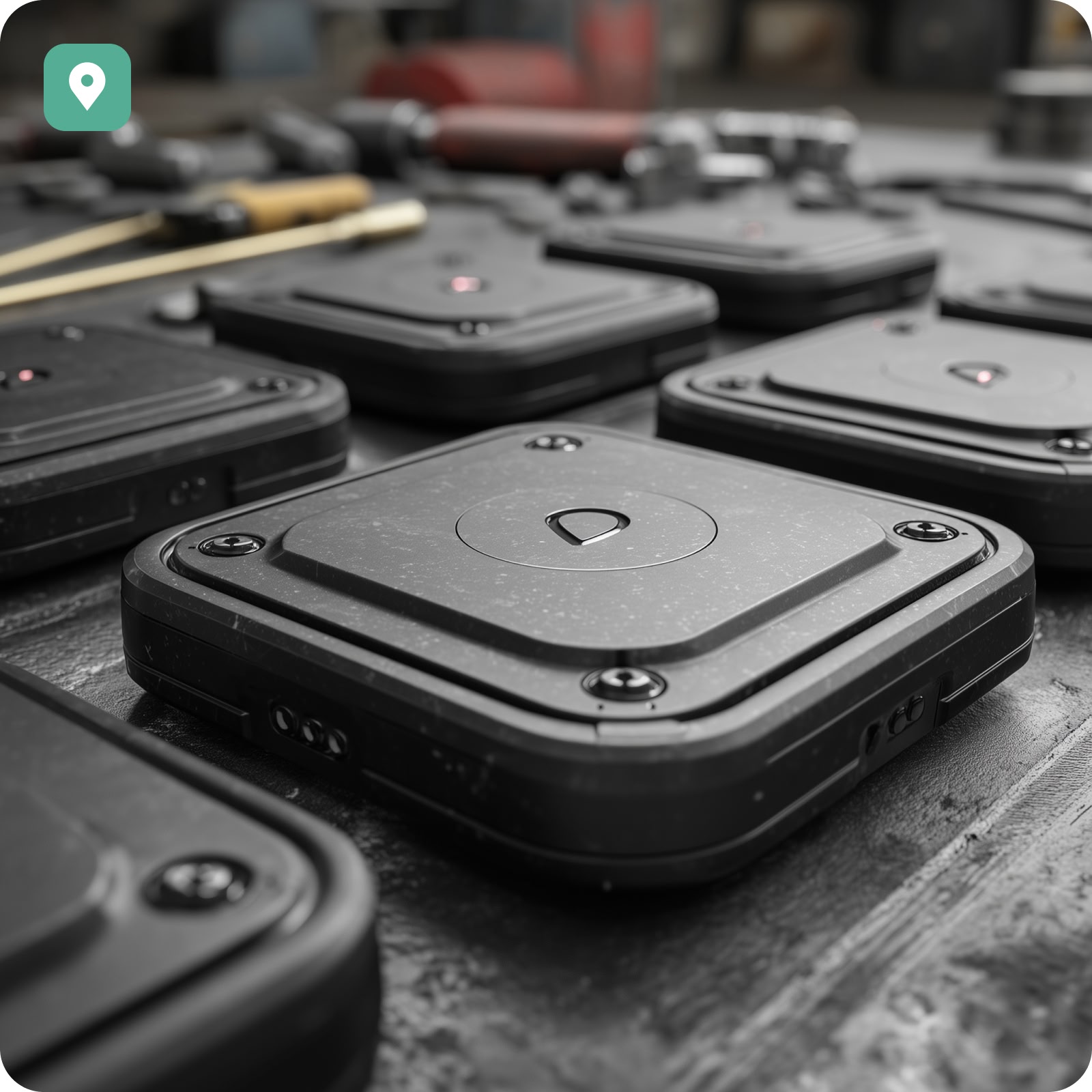
This is an area that will play an important role in the future of Pin Drop.
Looking ahead
The next chapter for Pin Drop is shaped by everything we have learned over the past fifteen years.
Maps will become more collaborative. Artificial intelligence will make location data far more useful. Hardware will extend digital awareness into the real world. And the need for tools that help people understand their environment will only increase.
Some of what we are building today already hints at that future.
More intelligent workflows. Better ways for teams to coordinate across large territories. Tools that connect data to places more seamlessly. Hardware that helps capture information directly from the field. And AI systems that help people make sense of everything their maps contain.
The goal remains the same as it was fifteen years ago: to make the real world easier to understand and navigate.
Gratitude for the journey
Reaching fifteen years is a moment to pause and reflect on the people who made it possible.
Many individuals have contributed to the journey. Early supporters who believed in the idea (hat tip Shak, Frank, Seb, Mike and Gavan) when it was still forming. Team members who dedicated their time and energy to building the product (special shout out to Tom, Alen, Gabriel, Giacomo, Sascha, Andrea and Donal). Partners who helped shape new directions.
And of course the millions of people who have used Pin Drop to navigate their lives, their work and their adventures.
Every map created, every pin dropped and every place shared has played a small role in the story.
Technology will continue to evolve, but the human need behind it remains constant.
We all want to remember places. Share discoveries. Organise the parts of the world that matter to us.
Pin Drop has always been about that simple idea.
The next fifteen years
If the past fifteen years have taught us anything, it is that the world will continue changing faster than we expect.
New technologies will emerge. Entire industries will transform. New ways of working and travelling will appear.
But one thing will remain true.
Places still matter.
They are where life happens.
As long as people continue exploring, building, meeting and discovering, there will always be a need to make sense of the world around us.
Pin Drop is just getting started.
To everyone who has been part of the journey so far, thank you from the bottom of my heart. And to everyone who will join us in the years ahead, we cannot wait to see where the next fifteen years take us.


